
There is a wooden recipe box behind the paint counter of a family-owned hardware store, and it holds the most valuable thing in the building.
It isn’t the cash drawer or the key machine. It’s a set of index cards, one for every customer who has ever had paint mixed there and asked the store to keep the formula. The cards are filed by last name. Each one has the color, the base, the sheen, the date, and a note in pencil: “front door, 2019,” “nursery, then hallway,” “touch-up for the porch rail, same as Dad’s.”
When a customer walks in and says, “I need the same green as last time, but I don’t remember what it was called,” the person at the counter pulls a card. Sometimes it’s the second generation of the family asking for a color their parents chose. Twice that year, it was someone whose house had changed hands, asking whether the store might have the previous owner’s color on file. It did.
The big-box store across the highway has more paint. It might have the same color in its system. But it doesn’t have the card, the pencil note, or the person who remembers that the porch rail was always a shade darker than the door.
This article is about building deeper brand connections, the kind that bring people back because they feel known, not because they were reminded. The hardware store is invented. The recipe box is the kind of thing many local businesses already have, often without realizing what it is.
For a small business, a brand is mostly made of decisions people recognize without being told.
The store’s logo is a plain wordmark on the sign and the receipt. Customers couldn’t describe it. But they could describe the store: the paint cards, the fact that someone will walk you to the right aisle instead of pointing, the habit of cutting a single key without making you buy a pack, the bin of loose screws sold by the piece, and the way the staff say “let’s figure it out” when someone brings in a broken part in a sandwich bag.
Each of those is a brand decision. Someone chose to keep the cards, to sell screws by the piece, and to train new staff to walk with customers. Over time, the decisions became the store’s reputation.
A brand decision has three parts. It’s a choice, it’s repeated, and people notice it. The logo on the sign is part of the brand, but it’s the smallest part. The promise the store keeps every day is the part people recognize.
There’s a difference between an audience and a community. An audience receives. It hears your message, sees your posts, and gets your emails. A community has a role. Its members contribute, recognize each other, and have a reason to come back that isn’t only about buying.
People want to belong somewhere. They don’t want to be managed. Most people can feel the difference between a business that knows them and a business that’s running a campaign on them. Being greeted by name because someone remembers you is belonging. Receiving an automated email that says “We miss you, [first name]!” is management.
The hardware store’s deepest connections come from small moments of being known: the card in the box, the person who remembers your project, the advice that saved a trip. None of them can be automated, and none of them needs to be.
A business can satisfy every customer and still have no relationship with any of them.
A satisfied customer got what they came for. The price was fair, the item was in stock, and the checkout was quick. That’s necessary, but it’s not what makes a person drive past a bigger store to come back.
In a 2016 Harvard Business Review article, Alan Zorfas and Daniel Leemon argue that satisfaction alone is the wrong target, and that customers who feel an emotional connection to a brand are worth more to it than customers who are merely satisfied. The point for a small business is simple: a smooth transaction is the floor, not the goal. Connection comes from how people feel about you after they leave.
For a hardware store, the feeling that matters most is often confidence: “I can fix this.” A customer who leaves with the right part and a sentence of advice feels more capable than when they walked in. That feeling is what they remember, and it’s what they tell their neighbor.
Many small businesses tell their story as a history of themselves: founded in a certain year, three generations, family owned, proud to serve. That’s true and worth saying once. But a story that is only about the company gives the listener nothing to do with it.
The stories people retell are the ones where they, or someone like them, are in the story. At the hardware store, the story customers tell isn’t “they’ve been here a long time.” It’s “I brought in a broken faucet cartridge in a sandwich bag, and the guy at the counter found the match in a drawer and showed me how to put it in.” Or, “They had my parents’ paint color from twenty years ago.”
The store’s job is to make those stories easy to tell and to tell them back. When the store writes about itself, in a newsletter, on its website, or on the wall by the register, the best material is the customer’s project, told with permission: the porch rail restored, the community garden’s raised beds, the high school’s set for the spring musical.
Those stories carry the brand promise better than any statement of values, because they show it being kept.
Sometimes a deeper connection comes from explaining something people might not like.
The store stopped carrying a popular brand of cordless tools when the brand moved most of its line to the big-box chains and the store could no longer get parts for repairs. Customers asked about it. Instead of a vague “we don’t carry that anymore,” the owner wrote a short note by the tool wall and said the same thing at the counter: we stopped carrying it because we couldn’t get you the repair parts, and we don’t want to sell you something we can’t help you fix.
That note is a brand decision explained in plain words. It tells customers what the store values, and it trusts them to understand. Revealing a little of the reasoning behind a decision is a form of openness, and openness builds closeness. The APA Dictionary of Psychology describes self-disclosure as revealing personal information about oneself to others, and notes that it can foster feelings of closeness and intimacy. A business isn’t a person, but the people in it are, and when they explain their choices honestly, customers feel let in.
There’s a limit. Explaining is not oversharing, and it’s never complaining about customers, competitors, or suppliers. It’s a clear reason, offered once, in the same voice the store uses for everything else.
One reason a local store can matter so much to a community is that it’s a place where people who don’t know each other well cross paths.
In 1973, the sociologist Mark Granovetter published “The Strength of Weak Ties” in the American Journal of Sociology. The paper argued that acquaintances, the people we know a little but not well, matter in ways close friends don’t, because they connect us to people and information outside our own circle.
A hardware store counter is full of weak ties. The retired electrician who comes in every Saturday, the young couple renovating their first house, the contractor who knows which plumber to call, and the clerk who has heard every kind of problem. When the clerk says, “The gentleman by the key machine did exactly this job last month, ask him,” the store has connected two weak ties. The young couple leaves with an answer and a name. The electrician leaves feeling useful.
The store didn’t create a community program. It noticed that its counter was already a meeting place, and it began making introductions on purpose.
The next step is to give some of those people a role.
A role is different from a reward. A reward says, “Thanks for spending money.” A role says, “We need what you know.” At the hardware store, roles came naturally once the owner started looking for them:
None of these is a program with a name. Each is a role a real person was invited to take, and each gives other customers a reason to come back.
Many small businesses think about loyalty as a card, an app, or a points balance. Those can be useful, but they aren’t what loyalty is. Loyalty is repeat trust: a person choosing you again because the last time went well and they expect the next time to go well too.
A loyalty system worth having gives the person something they value, not just something the business wants to track. At the hardware store, the paint card file is a loyalty system. It gives the customer a record they’d otherwise lose. The notebook where the counter staff write down the odd-size furnace filter or the unusual hinge a regular buys every year is another. The store’s habit of setting aside a part for someone who called ahead is a third.
Each of those is a human system. It works because a person keeps it, and it gives the customer something useful: memory, convenience, or saved effort. If a store adds a punch card or a rewards app, it should build it on the same principle. What does this give the person? If the answer is “a reason for us to email them,” it won’t build connection.
The store’s promise, if it had to write one down, would be something like: “We’ll help you figure it out, and we’ll remember.”
That promise has to sound the same everywhere. It should sound the same at the counter, on the phone, on the store’s sign, in its newsletter, and in its social posts. If the counter is warm and practical, the posts shouldn’t be loud and salesy. If the staff say “let’s figure it out,” the website shouldn’t say “solutions for all your home improvement needs.”
Consistency of voice is what makes a brand recognizable without a logo. A customer who reads a short post about the window-glazing workshop should hear the same person who helped them find the right screw.
Deeper connection is easy to fake badly, and customers notice quickly.
Don’t pretend to know people you don’t. A form email that uses someone’s first name isn’t familiarity. If the store doesn’t remember a customer, it’s better to ask a good question than to act as though it does.
Don’t use a customer’s story without asking. The best stories are personal, which is exactly why they need permission. A photo of a finished porch on the paint board is a gift from the customer. It should always be offered, never taken.
Don’t give people a label instead of a role. Calling customers “family” or “members” doesn’t make them either. A role is something a person does, like teaching a workshop, answering questions, or helping build a set. A label is just a word.
Don’t make the brand louder to make it deeper. More posts, bigger signs, and more frequent emails rarely build connection. The store’s most effective brand decision, the recipe box, makes no noise at all.
Connection is hard to count, but it’s easy to notice if you pay attention.
Listen for the stories you hear back. When a new customer says, “My neighbor told me you’d have my paint color,” the story has traveled. Notice who returns, and why. If people come back for advice as well as for parts, the relationship has grown past the transaction. Watch for people asking for a role. When a customer offers to teach a workshop, or the drama teacher brings students to pick up lumber and help sort it, the community is taking part on its own.
Write those moments down. Over a season, they tell you more about the strength of your brand than any campaign report can.
The hardware store is a service business. Its relationships are with customers, and most of them are simple: people come in, get help, and come back.
A mission organization has several relationships at once, and they’re different. Consider a public library foundation, the nonprofit that raises money to support the local library.
Its donors give money because they care about what the library makes possible. Its volunteers give time, at the book sale, the reading programs, and the used-book shop in the lobby. The people the library serves, including children, students, job seekers, and older adults learning a new skill, are the reason the foundation exists, but they may never know it does.
Each relationship needs its own role and its own story. Donors want to see what their gift did, told through the people served, with permission and dignity. Volunteers want to be useful, recognized, and connected to one another. The people served shouldn’t be turned into marketing. They should simply experience the library working well, and if they want to share their story, they should be invited, not recruited.
The promise has to be the same across all three, in the same voice. If the foundation tells donors that every child should have access to books, its volunteer emails and its book sale signs should sound like the same organization saying the same thing.
A small business can start with a few questions. Answer them honestly and write the answers down.
1. What decisions do customers already recognize? List the habits people mention when they talk about you. Those are your real brand.
2. What stories do people retell? Write down three stories customers have told you about your business. Notice who the hero is.
3. Where do people cross paths? Find the counter, the waiting room, or the event where customers meet each other. Make one introduction on purpose this month.
4. Who could take a role? Think of one regular whose knowledge others would value. Invite them to share it in a small, specific way.
5. What does your memory give people? Look for the record you keep, or could keep, that saves customers effort. Make sure it’s kept by a person and offered freely.
6. Does your voice sound the same everywhere? Read your sign, your website, your last three posts, and a transcript of how you answer the phone. They should sound like the same person keeping the same promise.
A young woman comes into the hardware store on a Saturday in October with a paint chip peeled from the inside of an old cabinet door. She just bought the house. The previous owner, she says, was an older man who’d lived there for decades.
The clerk takes the chip, looks at the address she gives, and goes to the recipe box. There’s a card. The color has a name and a formula, the base and sheen, and a pencil note: “kitchen cabinets, 2008, his wife picked it.” The clerk mixes a quart.
While it’s in the shaker, the clerk tells her about the first-Saturday table and the retired electrician, who, it turns out, did the wiring in her kitchen years ago. She comes back the next month with a question about the outlets.
She tells the story to everyone who visits her kitchen: the paint card, the formula, the man who wired the house. She has a role in the store’s story now, and she didn’t have to be asked.
If you run a local business and want customers to feel known rather than marketed to, start by writing down the decisions they recognize and the stories they already tell about you. Bring that list to a conversation with WeKinnect, and we’ll help you build a brand people can retell, in the same voice everywhere, with a real role for the people who make it matter.
 Written By
Darlene Gagnon is the founder of WeKinnect Global Branding Agency. Guided by the core value of Service before Self, she works with entrepreneurs and family-owned legacy businesses. She focuses especially on restaurants, arts, and travel and tourism. Darlene writes on Branding, Positioning, Marketing Strategy, Public Relations, Storytelling, and Entrepreneurship. WeKinnect serves entrepreneurs and family-owned legacy businesses across restaurants, arts, travel and tourism, banking, home services, nonprofits, and the pet industry, and Darlene brings that same spirit of service to every piece she writes.
December invites two mistakes. One is to keep sprinting until the calendar flips, then collapse. The other is to invent a brand-new

Picture a cold Tuesday night in December. At 10:40 p.m., a woman stands outside her own front door with a bag of groceries, a phone

On a cold Saturday morning in December, the owner of a family masonry company clears the kitchen table. He sets out three index card
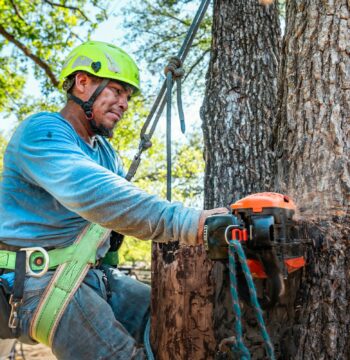
It's a Monday morning in early December. The owner of a small tree service sits in the truck before the crews roll out, phone in one